


Table of Contents
- Why Verifying Online Small Business Quality Matters
- Step 1: Check Business Registration and Public Records
- Step 2: How to Check If a Website Is Secure for Shopping
- Step 3: How to Spot Fake Online Stores Before You Buy
- Step 4: How to Read Online Business Reviews Accurately
- Step 5: Verify Online Business Identity Through Social and Digital Presence
- What Separates a Trustworthy Small Business from a Drop-Shipper
- Frequently Asked Questions
Last Updated: August 30, 2026
Why Verifying Online Small Business Quality Matters
Knowing how to verify online small business quality has never been more important for shoppers. With thousands of new e-commerce stores launching every month, the gap between a legitimate, care-driven business and a low-effort drop-shipping operation has never been harder to spot from a product page alone. At WhisperHillGoods, we hear this concern regularly from customers who have been burned before: the preview looked beautiful, the item arrived disappointing, and the "satisfaction guarantee" turned out to be a customer service black hole.
Business verification is the practice of confirming that an online seller is who they claim to be, operates from a real location, and stands behind what they sell. It combines public records checks, digital identity signals, and review analysis into a single due diligence framework.
Here's what most shopping guides get wrong: they treat verification as a one-step process. Check for HTTPS, move on. That's not enough. Sophisticated scam operations now clear that bar easily. The real work is cross-referencing multiple data points until a consistent picture emerges. Below, we walk through exactly how to do that.
The FTC's consumer guidance on online shopping scams documents the most common fraud patterns and what to look for before you hand over payment details. It's worth bookmarking.
Step 1: Check Business Registration and Public Records
Public records are the foundation of any serious business verification effort. A real business leaves a paper trail. A scam operation, almost by definition, does not.
State Business Registries and the BBB
Every state maintains a Secretary of State business registry where registered entities, including LLCs and corporations, appear by name. Search the registry for the state the business claims to operate from. You're looking for an active registration status, a matching business name, and a registered agent address that corresponds to what the business advertises publicly. Mismatches between the registered address and the website contact information are a meaningful red flag.
The Better Business Bureau is a useful secondary check. A business profile on the BBB doesn't guarantee quality, but the complaint history section tells you a great deal. Look specifically at how the company responded to unresolved complaints, not just the rating itself. A business with three complaints that resolved them transparently is often more trustworthy than one with a perfect score and no history at all.
Tax Identification and Business Licensing
Legitimate businesses operating in the United States hold an Employer Identification Number issued by the IRS. While you won't see this number displayed publicly, you can ask for it when doing B2B due diligence. For consumer purchases, the more practical check is business licensing: many states and municipalities require retail sellers to hold a local business license, and some states publish these records online.
The IRS guidance on verifying business identity outlines how tax identification works and what legitimate businesses are required to hold. If a seller cannot provide basic registration information when asked directly, treat that as a serious warning signal.
| Verification Step | What to Check | Where to Look |
|---|---|---|
| Business registration | Active status, matching name | State Secretary of State registry |
| Complaint history | Volume, resolution quality | Better Business Bureau (bbb.org) |
| Business license | Active license, correct jurisdiction | State or city licensing portal |
| Physical address | Matches registration records | Google Maps cross-reference |
| Tax identification | EIN on file (B2B) | Ask directly; IRS.gov for context |
Step 2: How to Check If a Website Is Secure for Shopping
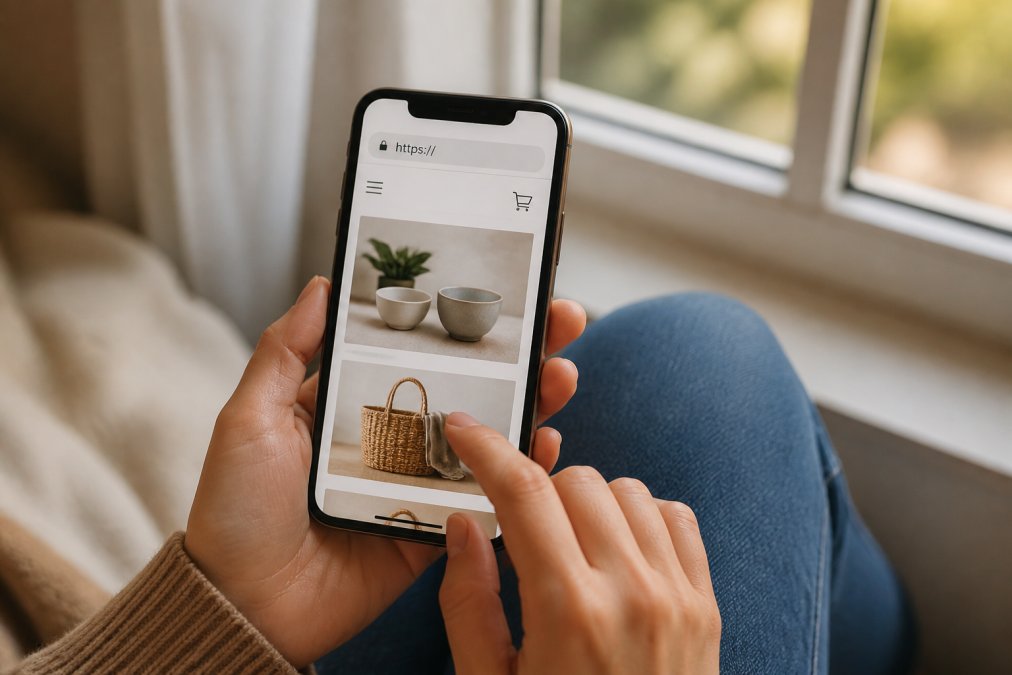
Checking whether a website is secure for shopping starts with the browser address bar, but it doesn't end there. A padlock icon and an HTTPS prefix confirm that the connection between your browser and the server is encrypted. That matters for protecting your payment data. What it does not confirm is that the business on the other side of that connection is legitimate.
Domain Age, HTTPS, and Contact Information
Domain age is one of the most overlooked trust signals in consumer due diligence. Scam operations frequently register domains days or weeks before launching a campaign, collect payments, then disappear. Tools like WHOIS lookup services let you check when a domain was registered. A store claiming years of happy customers but running on a six-month-old domain deserves scrutiny.
Beyond the padlock, look for these contact information signals on any site you're considering:
- A physical address that you can verify against the business registration records
- A working phone number (call it before you order)
- A real email address on a matching domain, not a generic Gmail or Yahoo account
- Clearly stated business hours and response time expectations
The absence of any of these is not automatically disqualifying, but the absence of all of them together is. A business with no verifiable physical address, no phone number, and a contact form as its only communication channel is asking you to take a significant leap of faith.
Secure connection protocols protect your data in transit. They say nothing about what happens after your payment clears.
Step 3: How to Spot Fake Online Stores Before You Buy
Most fake online stores fail on specificity. Legitimate small businesses have details: a named founder, a real origin story, product photography that matches the brand's aesthetic, and descriptions written by someone who actually knows the product. Scam stores tend to recycle.
Red Flags in Product Listings and Pricing
The biggest mistake shoppers make is treating unusually low prices as a deal rather than a warning. Pricing that sits dramatically below market norms for comparable products often signals one of two things: counterfeit goods, or a store that will take payment and never ship. Neither is a deal.
Specific red flags in product listings include:
- Stock photography clearly lifted from manufacturer catalogs, with no original images
- Product descriptions that read as machine-translated or copied verbatim across multiple items
- No size guides, material specifications, or care instructions for physical goods
- "Limited time" urgency banners that reset every time you reload the page
- Shipping estimates of four to eight weeks with no tracking information offered
Cross-Referencing Multiple Data Points
This is the part most guides skip entirely. No single verification signal is conclusive. A scam site can have HTTPS. It can have a social media presence. It can even have some positive reviews. What it almost never has is a consistent story across all data points simultaneously.
Cross-reference at least three independent sources: the business registration record, the domain registration date, and independent customer reviews from a platform the business does not control. When those three sources align with what the business claims about itself, confidence increases substantially. When they contradict each other, stop.
Step 4: How to Read Online Business Reviews Accurately
Reading online business reviews accurately means understanding that volume and star rating are the least important numbers on the page. The distribution of reviews, the recency pattern, and the specificity of individual reviews tell you far more.

Spotting Authentic vs. Fake Reviews
Authentic reviews tend to be uneven. They mention specific products by name, describe real shipping experiences, note minor disappointments alongside genuine praise, and vary in length and vocabulary. Fake review campaigns produce clusters of short, generic, five-star posts within narrow time windows, often from accounts with no other review history.
When evaluating a business's review profile, look for:
- Review velocity: A sudden spike of five-star reviews followed by a long gap is a classic manipulation pattern.
- Specificity: Authentic reviewers mention product details, packaging, or customer service interactions by name.
- Complaint responses: How a business handles negative reviews reveals its actual customer service culture. Defensive, dismissive responses to legitimate complaints are a stronger signal than the complaint itself.
- Third-party platforms: Reviews on the BBB complaint database and independent consumer protection platforms are harder to game than reviews on the business's own site.
A business with a handful of detailed, mixed reviews is almost always more credible than one with hundreds of identical five-star ratings and no critical feedback at all.
Step 5: Verify Online Business Identity Through Social and Digital Presence
A business's digital identity should be coherent across platforms. The same brand voice, consistent product photography, matching contact details, and an account history that predates the current promotion cycle: these are the markers of a real operation.
Check the social media account creation date, not just the follower count. Many scam operations purchase followers to create a false impression of legitimacy. What they cannot easily fake is years of consistent posting history, genuine customer interactions in comments, and a community that talks back.
For small businesses specifically, look for evidence of the human behind the operation. A named founder, behind-the-scenes content, responses to customer questions in comments: these signals are difficult to manufacture at scale. A social presence that consists entirely of product promotional posts with no personality and no customer interaction is worth examining more carefully.
Third-party validation matters here too. Has the business been mentioned in local press, industry directories, or professional associations? A business registered with its state, active on social media, and mentioned independently by sources it does not control presents a fundamentally different risk profile than one that exists only on its own website.
What Separates a Trustworthy Small Business from a Drop-Shipper
The distinction matters practically. A drop-shipping operation sources products from a third-party supplier and ships directly from that supplier's warehouse, often overseas. The business in the middle may have little visibility into actual product quality, shipping timelines, or what happens when something goes wrong.
A genuine small business, by contrast, handles its own inventory, controls its own quality checks, and is accountable for the customer experience end to end. The practical differences show up in:
- Shipping transparency: Real small businesses can tell you where your order ships from and provide tracking from dispatch. Drop-shippers often cannot.
- Customization capability: Personalized or custom orders require hands-on involvement. A business that can genuinely personalize a product is, by definition, touching that product.
- Accountability on returns: A business with its own inventory and a real satisfaction guarantee has a financial stake in getting orders right. A drop-shipper's "guarantee" depends entirely on the supplier's cooperation.
When a customer asks whether WhisperHillGoods is a real small business or just another drop-shipper, the answer is visible in the specifics: products designed, assembled, and shipped from a USA factory, with gift wrapping and personalized messaging handled in-house. That's not a claim a pass-through operation can make credibly.
The FTC's guidance on deceptive business practices is relevant here: businesses that misrepresent their operations, fulfillment origin, or product quality face consumer protection enforcement. Knowing what questions to ask gives you the tools to hold sellers accountable before a problem occurs.
Buying from an online small business should feel like a confident choice, not a gamble. The verification framework above, from public records and domain checks through review analysis and social identity confirmation, gives you a structured way to assess any seller before you commit. WhisperHillGoods is built on the premise that transparency earns trust: USA-made products, in-house personalization, package protection, and a 100% customer satisfaction guarantee that actually means something. Shop with confidence at WhisperHillGoods and experience the difference a genuinely accountable small business makes.
Frequently Asked Questions
How can I verify if an online business is legitimate?
Start by searching the business name in your state's official business registry to confirm it's registered. Then check the Better Business Bureau for complaint history, confirm the website uses HTTPS, look for a verifiable physical address and phone number, and read reviews across multiple independent platforms. Legitimate businesses also have consistent social media profiles, clear return policies, and transparent contact information. Cross-referencing at least three of these sources gives you a reliable picture of the business's credibility before you buy.
What are the red flags of a fake online store?
Common warning signs include prices that seem too low to be realistic, no verifiable physical address, recently registered domains (under six months old), poor grammar throughout the site, no customer reviews or only generic five-star reviews posted on the same day, missing or vague return policies, and no secure HTTPS connection. If a store only accepts wire transfers or gift cards and has no traceable business registration, treat that as a serious fraud risk and shop elsewhere.
Are there government databases to verify business registration?
Yes. Every state maintains a Secretary of State business registry where you can search for registered business names, formation dates, and registered agent information. The Federal Trade Commission (FTC) also maintains consumer protection resources for spotting scams. For businesses claiming specific licenses, check the relevant state licensing board. These public records searches are free and take only a few minutes, making them one of the most reliable steps in any due diligence process.
How can I tell if online reviews for a small business are authentic?
Look for reviews that mention specific product details, describe the ordering experience, or reference customer service interactions by name. Be cautious of clusters of five-star reviews posted within days of each other, reviews with no profile history, and overly generic praise. Third-party platforms like the BBB or verified purchase tags on retail sites add a layer of authentication. A healthy review profile typically includes a mix of ratings and detailed responses from the business owner, which signals genuine engagement.
This article was written using GrandRanker


